Should you get a full body MRI or a multi-cancer detection test?
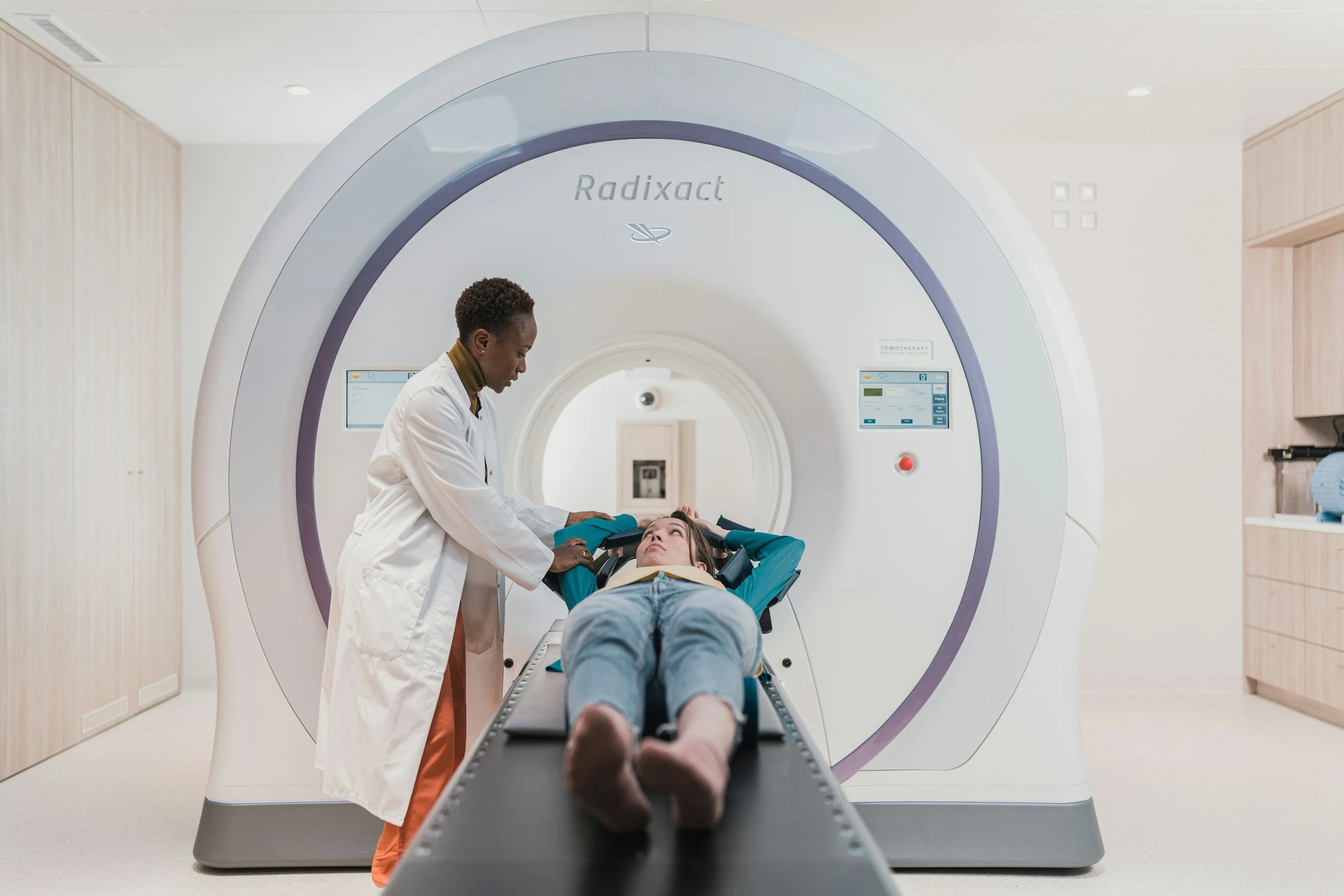
Cancer screening is entering a new era with testing.
Private companies now advertise full-body MRI scans that promise to detect hidden disease before symptoms appear. At the same time, multi-cancer early detection (MCED) blood tests claim they may identify dozens of cancers from a single blood draw.
For health-conscious people, the pitch is compelling: “Catch cancer early and save your life.” And who wouldn’t want this option if they could have it?
But Do these tests actually improve outcomes for healthy people, meaning decrease mortality — or do they mainly create anxiety, unnecessary procedures, and expensive follow-up testing?
The answer is nuanced.
Neither full-body MRIs nor broad annual cancer blood tests are currently recommended for routine screening in average-risk adults by major medical organizations yet and we will explain why. However, both technologies may eventually become important tools in preventive medicine.
This article explores the current evidence, potential benefits, the real risks, and when these tests might — or might not — make sense.
The Potential Benefits of Full-Body MRI
1. Incidental Early Detection
Occasionally, full-body MRIs do identify serious conditions before symptoms appear. Early detection can matter tremendously in specific cases.
This is the emotional core of the appeal: even if the odds are small, people hope the scan might find “the one thing” that saves their life.
2. No Radiation Exposure
Unlike CT scans, MRIs do not expose patients to radiation.
That makes MRI theoretically safer for repeated imaging over time.
3. May Help High-Risk Individuals
For certain people with inherited cancer syndromes or very strong family histories, whole-body MRI screening is already used in specialized medical settings.
Examples include:
Li-Fraumeni syndrome
Some hereditary cancer syndromes
Select high-risk surveillance programs
In these situations, the benefit-risk balance may be very different from the general population.
The Risks and Downsides of Full-Body MRI
This is where the conversation becomes far more important.
1. False Positives Are Extremely Common
One of the biggest problems with broad screening scans is the discovery of “incidentalomas.”
These are abnormalities that:
look suspicious,
are often harmless,
but trigger more testing.
Examples include:
benign cysts
harmless nodules
tiny lesions
anatomical variants
Once these findings appear on a scan report, they are difficult to ignore.
That can lead to:
repeat MRIs - the MRIs done in the commercial setting often use larger imaging cuts, so the MRI will likely have to be repeated at an academic center with smaller cuts for better visualization of the area of concern
CT scans
biopsies
specialist referrals
surgical procedures
months of anxiety
Many people undergo invasive follow-up testing for abnormalities that never would have harmed them.
2. Overdiagnosis
Overdiagnosis is different from a false positive.
In overdiagnosis, a real abnormality is found — but it would never have caused illness or death.
Some cancers grow so slowly that they may never become dangerous during a person’s lifetime.
However, once detected, both doctors and patients often feel pressure to treat them.
This can result in:
unnecessary surgery
chemotherapy
radiation
psychological stress
financial burden
More detection is not always equivalent to better health outcomes.
3. No Proven Mortality Benefit for Average-Risk Adults
This is the key issue.
At present, there is little evidence showing that routine full-body MRI screening reduces overall cancer mortality in healthy average-risk adults.
That distinction matters.
Finding more abnormalities is not the same thing as helping people live longer.
Some experts worry these scans may create a cycle of medicalization without clear evidence of benefit.
4. Cost and Access
Full-body MRI scans are expensive.
Most insurance companies do not cover them for general screening purposes.
For many families, spending thousands of dollars yearly on unproven screening may not represent the best use of healthcare resources.
What Are Multi-Cancer Early Detection (MCED) Blood Tests?
MCED blood tests are designed to detect signs of cancer from a blood sample.
These tests look for:
circulating tumor DNA (ctDNA)
abnormal methylation patterns
cancer-related proteins
molecular signals associated with tumors
Some companies claim these tests may identify signals from more than 50 cancers.
Examples include:
pancreatic cancer
ovarian cancer
liver cancer
colorectal cancer
lung cancer
The appeal is obvious:
A simple blood draw feels safer, easier, cheaper, and less invasive than imaging.
The Potential Benefits of Cancer Blood Tests
1. Potential to Detect Hard-to-Screen Cancers
Current screening programs only cover a limited number of cancers.
Routine screening exists primarily for:
breast cancer
cervical cancer
colorectal cancer
lung cancer (in select high-risk individuals)
prostate cancer (controversially and selectively)
Many deadly cancers — such as pancreatic or ovarian cancer — often lack effective early screening tools.
MCED tests aim to fill that gap.
2. Convenience and Accessibility
A blood test is relatively simple.
Compared with full-body MRI:
lower cost
faster testing
easier repeat screening
broader scalability
less intimidating for patients
This could potentially improve screening participation.
3. Lower Immediate Harm Than Imaging
Blood tests themselves are minimally invasive.
Unlike scans, they do not directly expose patients to radiation or generate detailed anatomical findings.
That may reduce some forms of incidental discovery.
The Major Problems With Annual Cancer Blood Testing
1. These Tests Are Still New
This is one of the most important facts consumers should understand.
Most MCED tests are not yet FDA-approved for general population screening.
Many are commercially available under laboratory-developed testing pathways, but large randomized trials demonstrating improved survival are still ongoing.
In medicine, a test must ultimately prove:
it detects disease accurately,
and that using it improves meaningful outcomes.
That second part has not yet been clearly established.
2. False Positives Still Exist
A positive blood test does not diagnose cancer.
Instead, it often triggers:
CT scans
MRIs
PET scans
biopsies
specialist consultations
Even highly specific tests can generate large numbers of false positives when applied to millions of healthy people.
This creates:
anxiety
unnecessary procedures
increased healthcare costs
possible complications from invasive testing
3. Sensitivity for Early Cancers Is Variable
Some MCED tests perform better in advanced cancers than in very early-stage disease.
Ironically, the cancers most important to detect early are often the hardest to identify.
Current evidence suggests sensitivity varies substantially by:
cancer type
stage
tumor biology
how much DNA the tumor sheds into the bloodstream
A negative test may therefore create false reassurance.
4. A Negative Test Does Not Replace Standard Screening
This is critical.
Even if someone receives a negative MCED blood test result, they still need evidence-based screening such as:
colonoscopy
mammography
cervical cancer screening
lung cancer screening (if eligible)
These proven screening tools remain the foundation of cancer prevention.
So… Should You Get Either One?
For most average-risk healthy adults, the answer today is probably not. But this will likely change in the future as technology improves and these methods show more evidence of benefits and less harm.
Focus first on proven screening methods.
That includes:
colon cancer screening
mammograms
cervical cancer screening
smoking cessation
exercise
healthy body weight
blood pressure control
sleep
vaccinations
These interventions have far stronger evidence for improving health outcomes than experimental broad cancer screening.
That does not mean full-body MRI or MCED testing are “scams.”
Both technologies are scientifically interesting and may become more useful over time.
But the marketing around them often gets ahead of the evidence.
For certain people — especially those at high risk these tools may be worth discussing with a physician.
People should understand not only what these tests might find, but also:
what they may miss,
how often they produce false alarms,
and what happens after a positive result.