Putting Vaccine Risk in Perspective: How It Compares to Everyday Life

When we think about health decisions, our brains aren’t always great at judging risk. Rare events can feel frightening, even when they’re far less likely than things we do every day without a second thought—like driving, eating, or taking common medications. Vaccines are often discussed as if they carry unique danger. In reality, they are among the safest medical interventions we have, especially when compared to risks we routinely accept in daily life.
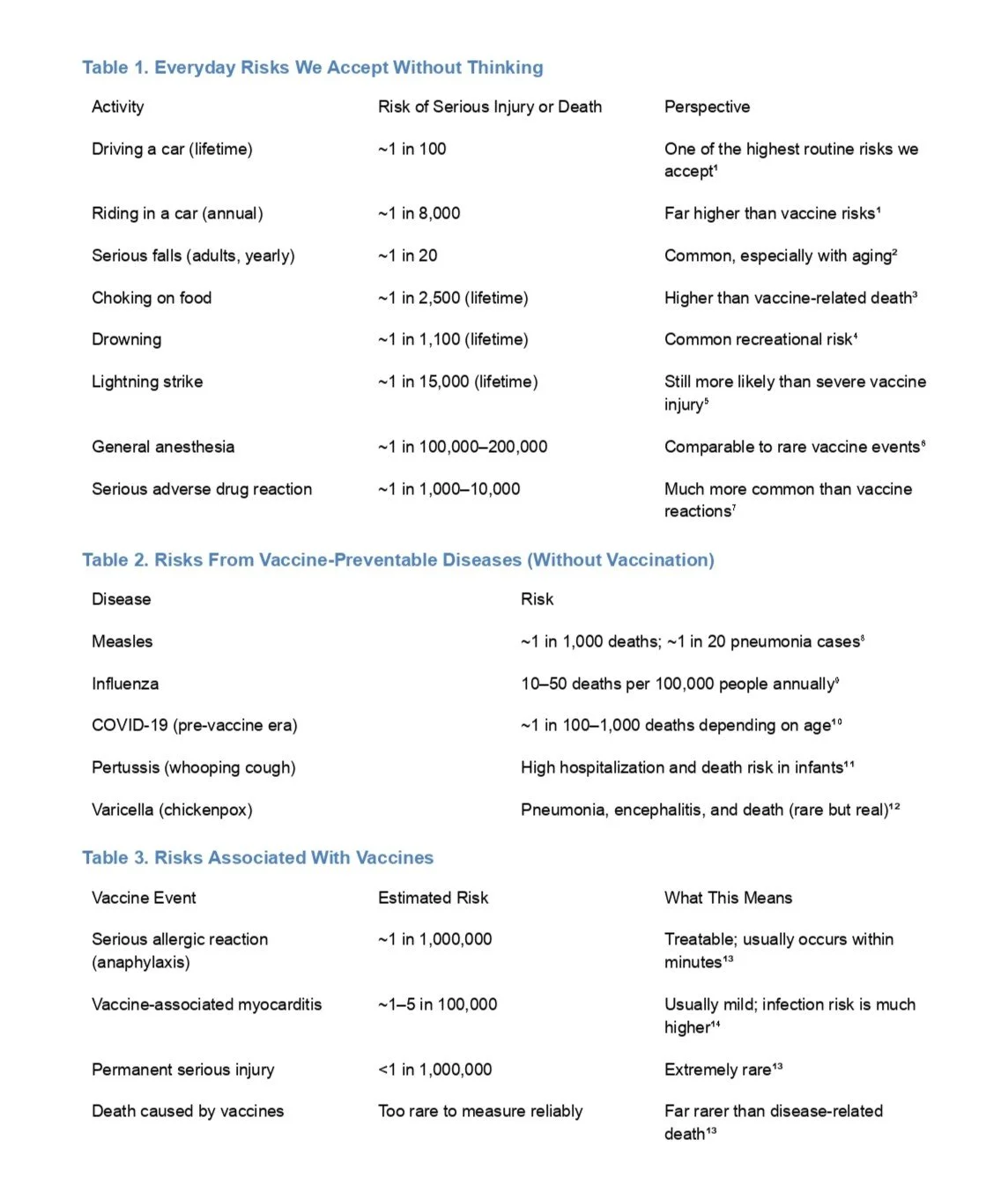
Let’s put those risks side by side.
Why Vaccines Feel Scarier Than They Are
Humans are wired to fear:
• New or unfamiliar risks
• Things we don’t personally control
• Emotional stories rather than statistics
Driving feels normal—even though it’s dangerous. Vaccines feel unfamiliar—even though they are safer. This difference between perceived risk and actual risk is well documented in psychology and public health.
The Bottom Line
• Everyday life carries far more risk than vaccination
• Vaccines don’t eliminate risk—they dramatically reduce it
• The risk of serious harm from vaccines is far lower than the risk of the diseases they prevent
• Vaccination is one of the most effective and safest tools in modern medicine
At our practice, we are always happy to discuss risks and benefits thoughtfully, respectfully, and with real data—because informed decisions are empowered decisions.
Citations
1. National Safety Council. Injury Facts: Motor Vehicle Deaths. https://injuryfacts.nsc.org
2. CDC. Older Adult Falls. https://www.cdc.gov/falls
3. CDC. Choking Prevention and Statistics. https://www.cdc.gov/injury
4. CDC. Unintentional Drowning. https://www.cdc.gov/drowning
5. National Weather Service. Lightning Safety Statistics. https://www.weather.gov/safety/lightning
6. New England Journal of Medicine. Anesthesia-related mortality.
7. FDA. Adverse Drug Reaction Statistics. https://www.fda.gov
8. CDC. Measles Complications. https://www.cdc.gov/measles/about/complications.html
9. CDC. Influenza Disease Burden. https://www.cdc.gov/flu/about/burden
10. CDC. COVID-19 Mortality by Age Group. https://www.cdc.gov/coronavirus
11. CDC. Pertussis (Whooping Cough). https://www.cdc.gov/pertussis
12. CDC. Chickenpox (Varicella) Complications. https://www.cdc.gov/chickenpox
13. CDC. Vaccine Safety Overview. https://www.cdc.gov/vaccine-safety
14. New England Journal of Medicine. Myocarditis after mRNA COVID-19 Vaccination. https://www.nejm.org